Procurement market research for SMMEs: win SA tenders

Procurement market research tells you which government tenders your SMME can realistically win before you spend a single hour writing a bid. Done properly, it surfaces winnable opportunities, reveals the pricing band buyers expect, and flags compliance gaps that would get you eliminated at Stage 1. Start with three actions: set up live-tender monitoring on the National Treasury eTender portal and provincial bulletins like the Gauteng Tender Bulletin; verify your Central Supplier Database (CSD) registration and SARS tax compliance PIN; and target RFQs first to build a track record before chasing formal tenders.
Quick compliance checklist — documents that cause administrative disqualification:- Valid SARS tax compliance PIN
- Active CSD registration and verification
- Required industry certificates (sector-specific)
- B-BBEE certificate or sworn affidavit (for EMEs/QSEs)
- Completed mandatory annexures (CVs, reference letters where specified)
Table of Contents
- How do you benchmark pricing and assess the competitive landscape?
- What does a realistic tender timeline look like?
- Step-by-step market research checklist for SMMEs
- Which government databases give you the best supplier and buyer intelligence?
- How do you build relationships with procurement officials?
- How do historical tender awards reveal winning bid patterns?
- What procurement regulations do SMMEs need to know in 2026?
- How do you validate supplier credentials and subcontractor reliability?
- Why risk assessment belongs in your procurement research, not your delivery plan
- Protenders cuts your research time from days to minutes
- Key takeaways
- FAQ
How do you benchmark pricing and assess the competitive landscape?
Price is never a guess in government procurement. Under both the 80/20 and 90/10 systems, the lowest acceptable tender sets the benchmark from which all other price scores are calculated. That means pricing too high costs you points directly, and pricing below cost creates delivery risk that can blacklist you.

To benchmark, pull three to five recent award notices for similar scopes from the National Treasury eTender portal or provincial bulletins. Note the awarded values and divide by the scope quantity or duration to get a per-unit or per-month rate. Cross-check against published rate cards from industry associations in your sector.
For subcontracting, the Preferential Procurement Regulations allow an organ of state to require compulsory subcontracting. If you cannot price competitively alone, partnering with a larger supplier as a subcontractor builds experience and revenue without the full bid burden. Conversely, if you are the prime bidder, subcontracting at least 30% to a qualifying EME or QSE can unlock additional B-BBEE preference points.
 *
*
What does a realistic tender timeline look like?
| Phase | Typical duration | Common pitfall |
|---|---|---|
| Market research and opportunity scan | 1–2 weeks | Skipping buyer profiling |
| Compliance document audit and renewal | 1–3 weeks | Expired SARS PIN or CSD lapse |
| Bid preparation and pricing | 1–2 weeks | Late start after advertised close |
| Submission | Day of close | Wrong format or missing annexure |
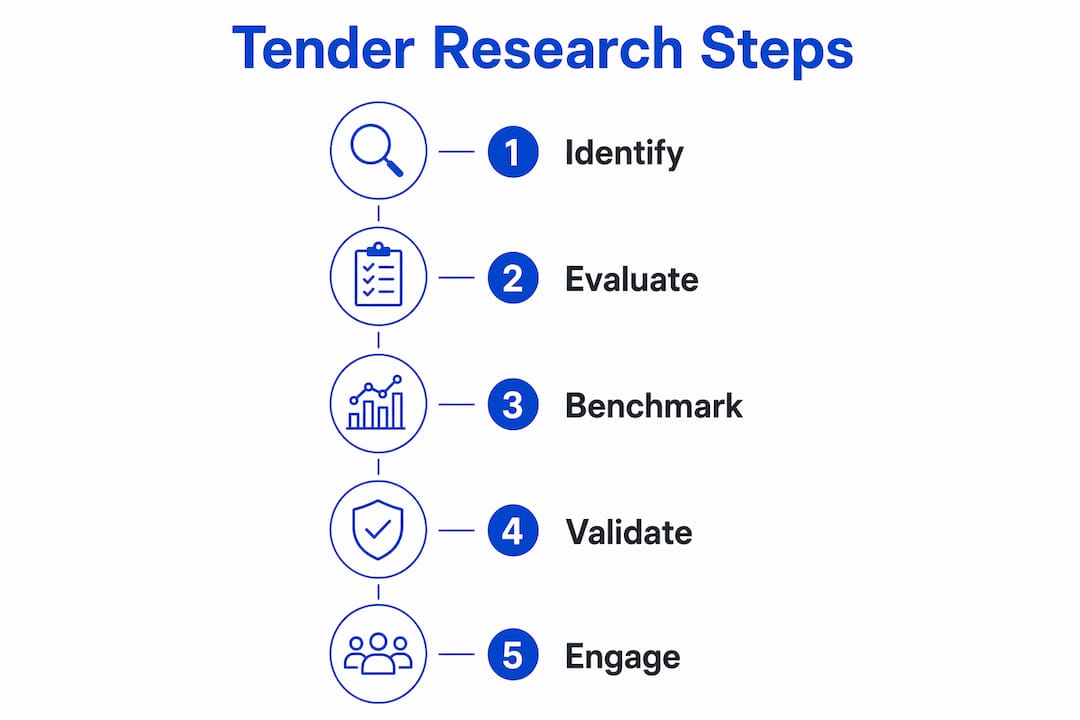
Step-by-step market research checklist for SMMEs
- Define your scope. List the goods or services you can deliver, with CIDB grading or professional registration where required.
- Monitor live tenders. Check the National Treasury eTender portal, Gauteng Tender Bulletin, and your municipal portal weekly.
- Profile the buyer. Read the full tender notice: evaluation criteria, functionality thresholds, preference point system (80/20 or 90/10), and any pre-qualification conditions.
- Audit compliance documents. Confirm CSD registration, SARS PIN validity, B-BBEE certificate, and sector certificates are current.
- Benchmark pricing. Pull three to five comparable award values from public notices.
- Assess competition. Check the CSD supplier database for registered suppliers in your category and region.
- Decide bid or no-bid. If you cannot meet the minimum functionality score or your price will be uncompetitive, skip and target the next opportunity.
- Prepare and submit. Use a document checklist against the specific bid's mandatory annexures before submission.
Which government databases give you the best supplier and buyer intelligence?
The CSD is the primary source for verifying supplier credentials. It shows registration status, tax compliance, and ownership details for any registered supplier. National Treasury's eTender portal lists all advertised national tenders and awarded contracts, giving you a direct window into buyer patterns and awarded values.
For provincial intelligence, each province publishes its own tender bulletin. The Gauteng Tender Bulletin, for example, covers Gauteng provincial departments and is published weekly. Municipal portals vary in quality, but most metros publish bid opportunities on their websites. Aggregating across all three spheres manually is time-consuming. Platforms like Protenders pull national, provincial, and municipal tenders into a single searchable feed, which cuts the daily monitoring task from hours to minutes.
*How do you build relationships with procurement officials?
Procurement regulations restrict direct lobbying during an active bid process, so relationship-building happens before and after, not during. Attend supplier days and briefing sessions that buyers advertise with the tender notice. These sessions are your legitimate window to ask clarifying questions and put a face to your company name.
Industry bodies and chambers of commerce host procurement networking events where you meet other bidders. Subcontracting arrangements with established suppliers are another route: you deliver part of a contract, the prime bidder vouches for your performance, and you gain a reference. Procurement conferences consistently highlight this foot-in-the-door approach as the most practical path for SMMEs with no prior government contract history.
*How do historical tender awards reveal winning bid patterns?
Award notices on the National Treasury eTender portal and provincial bulletins name the winning supplier, the awarded value, and sometimes the number of bids received. Tracking these over six to twelve months for your target buyer reveals the typical price range, whether the buyer consistently awards to EMEs or QSEs, and how often tenders are cancelled or re-advertised.
If a buyer repeatedly awards to the same supplier, check whether that supplier holds a term contract. If so, subcontracting to them is often more productive than competing head-on. If a tender has been re-advertised twice, the buyer likely struggled with non-responsive bids, which signals an opportunity if you can meet the administrative requirements cleanly.
*What procurement regulations do SMMEs need to know in 2026?
The Preferential Procurement Policy Framework Act and its regulations govern all organs of state. Key rules for SMMEs:
- Pre-qualification criteria can restrict a tender to EMEs, QSEs, or suppliers with a minimum B-BBEE status level. Check this before investing time in a bid.
- Functionality evaluation is separate from price scoring. A tender can require a minimum score (say, 65%) before your price is even considered.
- Subcontracting rules require approval from the organ of state after award. You cannot subcontract more than 25% to a party that scores fewer B-BBEE points than you without losing your own B-BBEE score.
- Administrative disqualification is immediate and non-negotiable. Missing a mandatory document eliminates your bid regardless of price or B-BBEE score.
The DSBD RFQ documentation illustrates how organs of state must state points for specific goals and what documentary proof is required to claim them. *
How do you validate supplier credentials and subcontractor reliability?
Start with the CSD. Every registered supplier has a CSD number; search it to confirm tax compliance status and ownership. For professional services, verify registration with the relevant statutory body (SACPCMP for construction project managers, ECSA for engineers, and so on).
For subcontractors, request three contactable references from contracts of similar scope and value. Ask specifically about delivery timelines and whether the subcontractor flagged problems early. A subcontractor who delivered late on a R500,000 contract will likely do the same on yours. Check the National Treasury Register for Tender Defaulters and the Database of Restricted Suppliers before signing any subcontract agreement.
*Why risk assessment belongs in your procurement research, not your delivery plan
Most SMMEs treat risk as a delivery problem. It starts earlier. During procurement market research, assess three risks before committing to a bid: financial risk (can you fund the contract until the first payment?), capacity risk (do you have the staff and equipment to deliver on time?), and compliance risk (are all your documents valid for the full contract period?).
Funding is the most common delivery failure for SMMEs that win tenders. Government payment cycles can run 30–90 days after invoice. If your working capital cannot bridge that gap, explore tender finance options before you submit, not after you win. Protenders connects SMMEs with funding partners as part of its platform, which means you can assess finance options at the same time as you assess the opportunity.
*Protenders cuts your research time from days to minutes
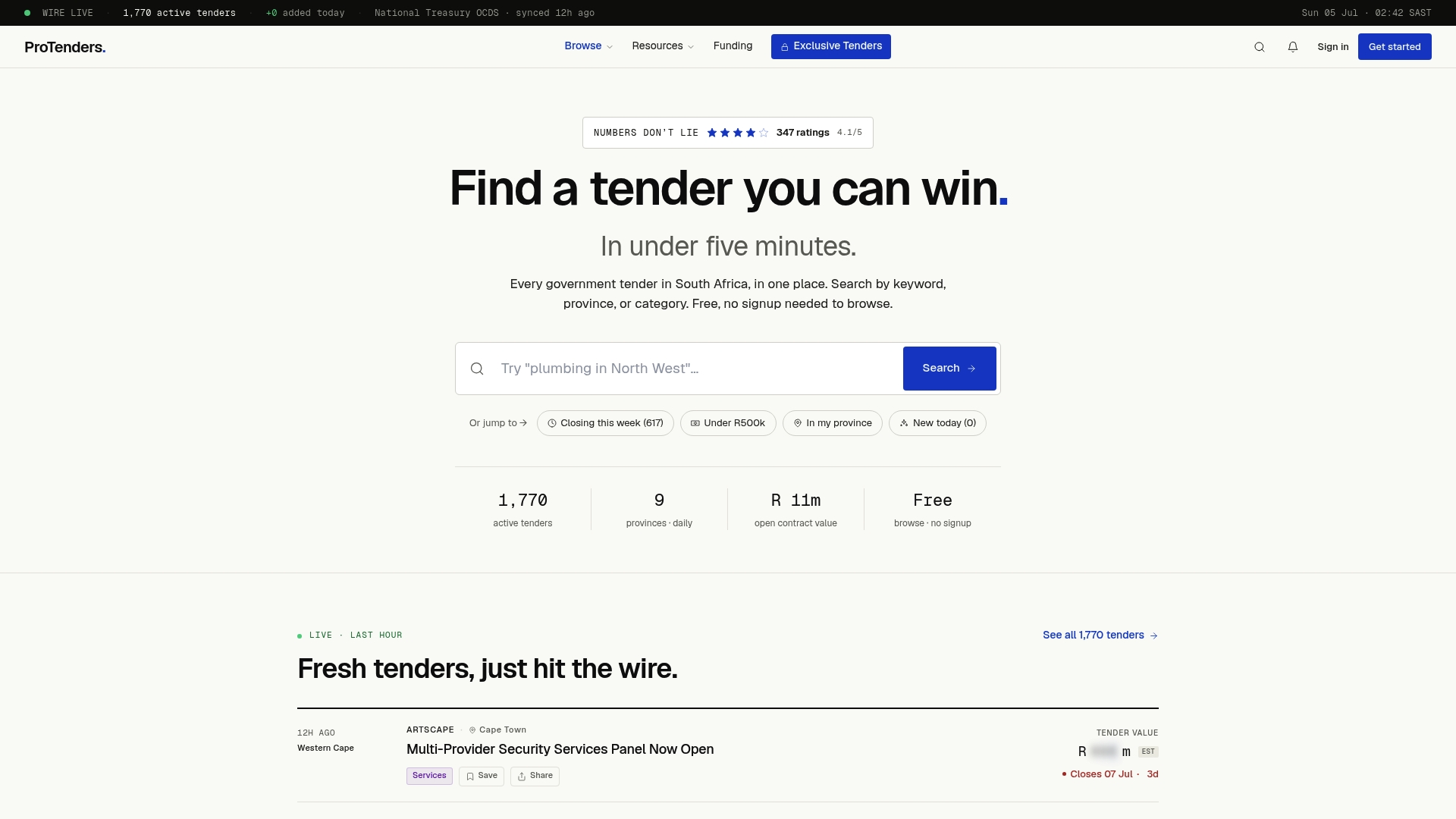
Running thorough procurement market research across national, provincial, and municipal portals manually can consume most of a working week. Protenders aggregates every live South African government tender into one searchable platform, filtered by keyword, region, or category, with no sign-up required to browse.
Where Protenders goes further than a simple search tool: compliance scorecards flag CSD and SARS PIN gaps before you submit; historical award data lets you analyse winning values for your target buyers; RFQ alerts notify you the moment a relevant low-threshold opportunity is advertised; and document templates reduce bid preparation time. The workflow maps directly to the research steps above: find the tender, profile the buyer, benchmark the price, fix any compliance gaps, then submit.
Search live tenders on Protenders or browse Gauteng opportunities to see what is open in your region right now. *Key takeaways
Solid procurement market research is the difference between bidding blind and bidding with a real chance of winning.
| Point | Details |
|---|---|
| Know your scoring system | Contracts up to R50,000,000 use 80/20; above R50,000,000 use 90/10. Price weight differs significantly. |
| Compliance first, always | Missing a SARS PIN, CSD registration, or mandatory certificate causes immediate disqualification. |
| Start with RFQs | Municipalities often use RFQs for lower-value contracts — lower competition, faster track record. |
| Mine award notices | Historical award values on the eTender portal reveal the price range buyers actually accept. |
| Use Protenders | Protenders aggregates national, provincial, and municipal tenders with compliance scorecards and RFQ alerts in one place. |
FAQ
What is procurement market research for government tenders?
It is the process of identifying winnable tender opportunities, understanding buyer evaluation criteria, benchmarking pricing, and verifying compliance requirements before submitting a bid.
Which preference point system applies to my bid?
The 80/20 system applies to contracts up to R50 million and the 90/10 system applies above R50 million, per South Africa's Preferential Procurement Regulations.
Why do so many SMME bids get disqualified at Stage 1?
Administrative disqualification is the leading avoidable cause of bid failure. An expired SARS tax compliance PIN, lapsed CSD registration, or missing mandatory annexure eliminates a bid before price or B-BBEE score is ever evaluated.
Should SMMEs start with RFQs or formal tenders?
Start with RFQs. Municipalities frequently use RFQs for lower-value contracts, competition is lower, and winning a few builds the reference history that strengthens later formal tender bids.
How does Protenders support procurement research?
Protenders aggregates all South African government tenders in one searchable platform, provides compliance scorecards, historical award data, and RFQ alerts, reducing the time from opportunity discovery to bid submission.
This article provides general information about South African government procurement processes. Confirm current regulations and compliance requirements with National Treasury or a qualified procurement professional for your specific situation.Recommended
- SMME Tenders South Africa 2026: Government Opportunities for Small Businesses | ProTenders
- ProTenders | Find a Government Tender in 5 Seconds | South Africa July 2026
- Municipal Tenders South Africa 2026: How to Win Local Government Contracts | ProTenders
- How to Find Government Tenders in South Africa (2025 Complete Guide) | ProTenders